
Prescription Medications That Cause Weight Gain as a Side Effect

Prescription Medications That Cause Weight Gain as a Side Effect

For many patients, starting a new prescription medication is a step toward reclaimed health. However, a common and often distressing complication can arise: unexplained weight gain. This phenomenon is frequently sidelined in clinical discussions, where the focus is understandably on treating the primary condition—be it depression, inflammation, or hypertension.

When the scale begins to climb, patients often feel a sense of personal failure or a lack of discipline. In reality, many pharmaceutical compounds “hack” the body’s internal signaling, overriding the natural cues for hunger and energy storage. Understanding the biological mechanisms behind medication-induced weight gain is essential for patient advocacy and for maintaining a balanced “benefit-versus-risk” approach to long-term treatment.

1. The Three Biological Mechanisms: How Drugs “Hack” the Scale

Medication-induced weight gain is rarely a simple matter of “calories in versus calories out.” Instead, drugs tend to interfere with one of three primary metabolic systems:


Appetite Stimulation (The “Hunger

View More Prescription Medications That Cause Weight Gain as a Side Effect
PCOS Weight Gain Management and Metabolic Health Issues

PCOS Weight Gain Management and Metabolic Health Issues

For many women, a diagnosis of Polycystic Ovary Syndrome (PCOS) feels like a mystery of reproductive health. However, the modern medical consensus has shifted: PCOS is fundamentally a metabolic disorder that manifests through the reproductive system. At the heart of this condition lies a complex web of hormonal “cross-talk” that makes weight management feel like an uphill battle.

The “PCOS Weight Trap” is a physiological reality where high insulin levels and elevated androgens (male-pattern hormones) create a biological environment that favors fat storage over energy utilization. Understanding this mechanism is the first step toward reclaiming your metabolic health and breaking the cycle of stubborn weight gain.

1. The Insulin-Androgen Connection: The Vicious Cycle

The primary driver of weight issues in PCOS is a phenomenon called hyperinsulinemia. Roughly 70% of women with PCOS have some degree of insulin resistance, regardless of their weight. In this state, your cells ignore the …

View More PCOS Weight Gain Management and Metabolic Health Issues
High Cortisol Levels and Chronic Stress-Induced Weight Gain

High Cortisol Levels and Chronic Stress-Induced Weight Gain

In our modern, high-velocity world, the human body is often trapped in a state of “biological emergency.” While our ancestors faced acute, life-threatening stressors like predators or natural disasters, today’s “predators” come in the form of relentless pings from smartphones, looming project deadlines, and the structural pressures of an always-on digital culture.

When these stressors become chronic, the body’s primary stress hormone—cortisol—stays elevated. This results in a “Survival Paradox”: your body, in a misguided attempt to protect you from a perceived famine or threat, begins to hoard energy, specifically in the form of abdominal fat. If you are struggling with weight gain despite a clean diet and consistent exercise, you are likely not experiencing a failure of willpower, but a failure of metabolic signaling.

1. The Cortisol-Insulin Connection: The Internal Sugar Spike

Cortisol’s primary job is to prepare the body for “fight or flight.” To do this, it …

View More High Cortisol Levels and Chronic Stress-Induced Weight Gain
Signs of Insulin Resistance Causing Belly Fat and Weight Gain

Signs of Insulin Resistance Causing Belly Fat and Weight Gain

For many, the journey to weight loss feels like a battle against a “broken” metabolism. You may find yourself eating fewer calories than your peers and exercising more frequently, yet the scale remains stagnant, and your waistline continues to expand. This phenomenon is often the result of the “Insulin Trap.”

Insulin resistance is not just a precursor to diabetes; it is a fundamental metabolic state where your body’s primary fat-storage hormone is running rampant. When you are insulin resistant, your body is effectively “locked” in storage mode, making it biochemically difficult to access and burn stored body fat for fuel.

1. The Biology of Resistance: The Lock-and-Key Failure

To understand why insulin resistance causes weight gain, we must look at how your cells process energy. Every time you eat, your blood sugar rises. In response, your pancreas secretes insulin, a hormone that acts as a “key.” This key is …

View More Signs of Insulin Resistance Causing Belly Fat and Weight Gain
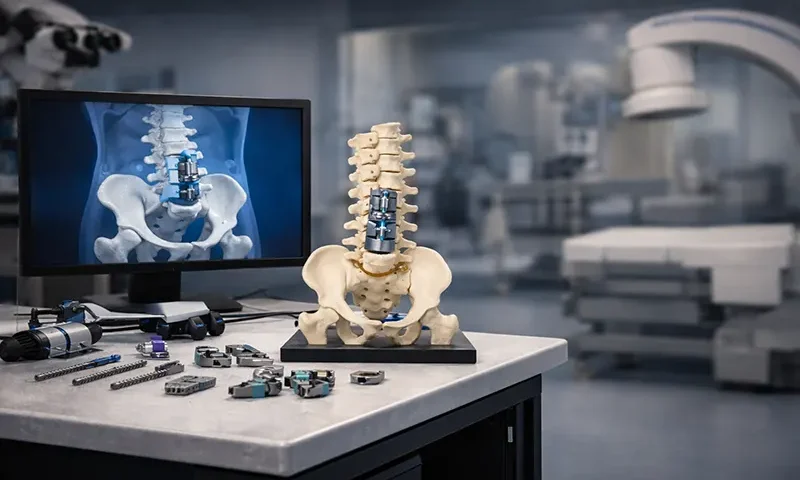
Advancing Precision in Minimally Invasive Spine Surgery

Dr. Larry Davidson on Innovations in Spinal Implants and Devices: Advancing Precision in Minimally Invasive Spine Surgery

Minimally invasive spine surgery has become an essential option for many patients seeking relief from back and neck conditions, and the technology behind spinal implants continues to advance at a steady pace. These innovations are reshaping how surgeons approach stabilization, decompression, and alignment, allowing procedures that once required large incisions and extended hospital stays to be completed through small access points with greater accuracy. Dr. Larry Davidson, a board-certified neurosurgeon with fellowship training in complex spinal surgery, recognizes the importance of these tools in strengthening the effectiveness of outpatient procedures and supporting safer, more predictable outcomes, incisions and extended hospital stays to be completed through small access points with greater accuracy. Dr. Larry Davidson, a board-certified neurosurgeon with fellowship training in complex spinal surgery, recognizes the importance of these tools in strengthening the effectiveness of outpatient procedures and supporting safer, more predictable outcomes.

Implants and devices used in spine …

View More Dr. Larry Davidson on Innovations in Spinal Implants and Devices: Advancing Precision in Minimally Invasive Spine Surgery