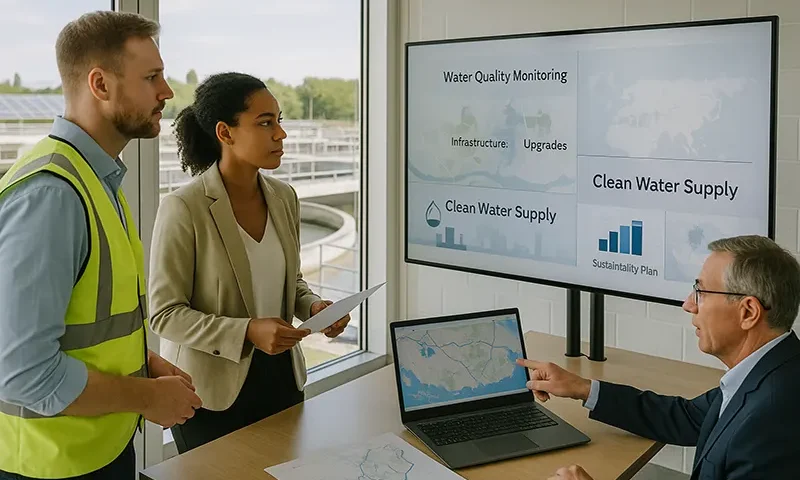
Core Strategies for Local Governments to Secure Clean Water Supply - The Municipal Mandate

Core Strategies for Local Governments to Secure Clean Water Supply – The Municipal Mandate

Clean water is the bedrock of public health, environmental stability, and economic growth; it is far more than a simple utility service. Yet, local governments and the utilities they oversee face a severe triple threat: decades-old infrastructure approaching failure, the challenge of filtering emerging contaminants (such as PFAS), and the profound uncertainties posed by increased climate variability, manifesting as alternating periods of drought and flood. Securing a resilient, clean water future requires local governments to deploy a sophisticated, multi-faceted governance strategy encompassing capital investment, sustainable finance, source water protection, and innovative technology.

Strategy 1: Infrastructure Modernization and Asset Management

The vast network of pipes, pumps, and treatment facilities requires an urgent strategic overhaul. Local governments must shift their focus from reactive maintenance (fixing leaks only when they burst) to proactive asset management. This involves implementing rigorous Capital Improvement Projects (CIP) that prioritize the replacement of critical aging components, …

View More Core Strategies for Local Governments to Secure Clean Water Supply – The Municipal Mandate
Nature’s Therapy: Unpacking the Role of Natural Ecosystems in Human Mental Health

Nature’s Therapy: Unpacking the Role of Natural Ecosystems in Human Mental Health

As modern life accelerates, characterized by cognitive overload and constant digital demands, the global struggle with stress, anxiety, and mental fatigue continues to escalate. Paradoxically, the solution may not lie in the latest technological intervention but in the most ancient of remedies: reconnecting with the natural world. This is more than an intuitive belief; a growing body of scientific literature confirms that exposure to natural ecosystems provides a vital, quantifiable resource for mental health. These environments are not merely pleasant backdrops but are essential restorative environments, underscoring the correlation between ecosystem preservation and public health investment. The central thesis is clear: the benefit of nature is measurable, relying on specific psychological theories that underscore natural spaces as a critical tool for stress reduction and cognitive restoration.

The Scientific Mechanisms of Restoration

The restorative power of nature is governed by distinct scientific frameworks that explain the profound changes …

View More Nature’s Therapy: Unpacking the Role of Natural Ecosystems in Human Mental Health
Sustainable Urban Planning Principles for Community Well-being - the Health Design

Sustainable Urban Planning Principles for Community Well-being – the Health Design

The long-term success of metropolitan areas can no longer be measured solely by traditional metrics like traffic throughput or tax base expansion. Today, the foundational mandate of city building is to prioritize holistic social and environmental health. Sustainable urban planning is the necessary framework that ensures a city’s long-term environmental, social, and economic vitality by consciously integrating human needs with ecological processes. This approach moves beyond simple mitigation, demanding that the very structure of our cities actively fosters human health and community well-being. The contemporary mandate for planning is to create resilient, equitable cities through interconnected design principles that ensure health equity and sustainability for all residents.

Principle 1: Compact, Mixed-Use Development

The legacy of mid-20th-century zoning often mandated rigid separation, isolating residential areas from commercial centers and workplaces. This single-use zoning generated sprawling dependence on the automobile. The first core tenet of modern sustainable design involves embracing compact, …

View More Sustainable Urban Planning Principles for Community Well-being – the Health Design
A Homeowner’s Guide to Mitigating Indoor Air Pollutants - The Invisible Threat

A Homeowner’s Guide to Mitigating Indoor Air Pollutants – The Invisible Threat

In the quest for a healthy environment, many of us focus on reducing outdoor pollution, but the most significant air quality threat often lies within the walls of our homes. The paradox of modern living is that while we spend up to 90% of our time indoors, the air in these tightly sealed spaces can be two to five times more polluted than the air outside. This concentration occurs because modern energy-efficient construction limits natural ventilation, effectively trapping pollutants emitted from synthetic materials and everyday activities.

Achieving superior Indoor Air Quality (IAQ) is critical for health and requires a systematic approach. The most effective strategy involves two complementary steps: direct source reduction and the implementation of enhanced filtration and air exchange.

Identifying the Hidden Threat: Major Residential Pollutants

A proactive approach to IAQ starts with knowing your enemy. The most common and dangerous residential pollutants fall into four …

View More A Homeowner’s Guide to Mitigating Indoor Air Pollutants – The Invisible Threat
Implementing Workplace Wellness for Healthy Employee Habits

Implementing Workplace Wellness for Healthy Employee Habits

In the fast-paced and often demanding landscape of the modern workplace, prioritizing employee well-being has become increasingly crucial. Employers are recognizing the direct link between a healthy workforce and improved productivity, job satisfaction, and overall company success. This article explores strategies for implementing workplace wellness programs that foster healthy habits among employees.

Promoting Physical Activity in the Workplace

Encouraging physical activity within the workplace is a fundamental aspect of employee well-being. Simple initiatives such as standing desks, walking meetings, or designated exercise spaces can promote movement throughout the day. Employers can also organize fitness challenges, yoga sessions, or group activities to make physical activity an enjoyable part of the work routine.

Healthy Nutrition Initiatives

The workplace plays a significant role in influencing employees’ dietary choices. Providing nutritious snack options, organizing nutrition workshops, and offering access to fresh and healthy food in cafeterias can contribute to better eating habits. Encouraging mindful …

View More Implementing Workplace Wellness for Healthy Employee Habits