
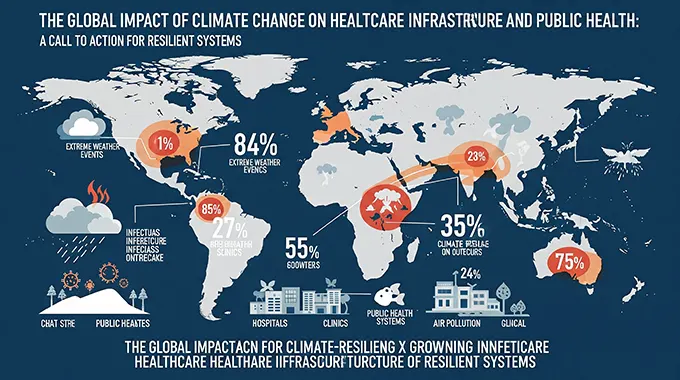
The Global Impact of Climate Change on Healthcare Infrastructure and Public Health: A Call to Action for Resilient Systems

The Global Impact of Climate Change on Healthcare Infrastructure and Public Health: A Call to Action for Resilient Systems

Climate change presents an existential threat that transcends borders and affects every aspect of our lives, including public health and healthcare infrastructure. As the world grapples with the escalating crisis of global warming, the repercussions on healthcare systems and the well-being of populations worldwide are becoming increasingly evident. This article explores the profound impact of climate change on healthcare infrastructure and public health on a global scale, highlighting the urgent need for concerted action to build resilience and mitigate the growing risks.

Climate Change and Healthcare Infrastructure: Vulnerabilities and Challenges

1. Extreme Weather Events

  • The rise in extreme weather events, such as hurricanes, wildfires, and heatwaves, poses significant challenges to healthcare infrastructure. Hospitals and healthcare facilities are at risk of damage and disruption, compromising the ability to deliver essential medical services during and after disasters.

2. Infrastructure Vulnerability

  • Aging healthcare infrastructure in many regions is ill-equipped to withstand the effects
View More The Global Impact of Climate Change on Healthcare Infrastructure and Public Health: A Call to Action for Resilient Systems
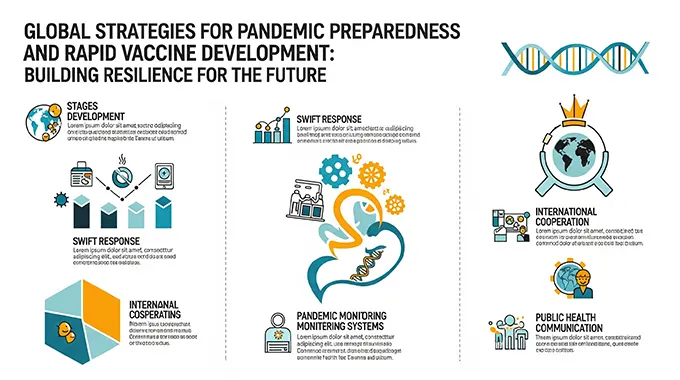
Global Strategies for Pandemic Preparedness and Rapid Vaccine Development: Building Resilience for the Future

Global Strategies for Pandemic Preparedness and Rapid Vaccine Development: Building Resilience for the Future

The COVID-19 pandemic has underscored the critical need for global strategies focused on pandemic preparedness and the rapid development of vaccines. As the world grapples with the ongoing impacts of the pandemic, there is an urgent call for collaborative efforts to build resilience and effectively respond to future health crises. This article delves into the essential global strategies for pandemic preparedness and emphasizes the imperative for swift vaccine development to safeguard public health on a global scale.

Pandemic Preparedness: The Need for a Coordinated Global Approach

1. Early Warning Systems and Surveillance

  • The establishment of robust early warning systems and surveillance networks is paramount in detecting and monitoring potential pandemic threats. Timely identification of emerging infectious diseases enables a proactive response to mitigate the spread of viruses and prevent widespread outbreaks.

2. Sustainable Health Infrastructure

  • Investing in resilient health infrastructure is essential for enhancing the capacity to respond to pandemics.
View More Global Strategies for Pandemic Preparedness and Rapid Vaccine Development: Building Resilience for the Future