
Underactive Thyroid: Why You’re Gaining Weight Despite Diet and Exercise

Underactive Thyroid: Why You’re Gaining Weight Despite Diet and Exercise

For thousands of women, the morning routine has become a source of quiet desperation. You wake up exhausted despite eight hours of sleep, skip the office donuts in favor of a meticulously tracked kale smoothie, and push through a grueling 45-minute spin class—only to step on the scale and see the number has ticked upward again.

When you bring this up to a medical professional, the response is often a polite version of “medical gaslighting.” You are told to “track your calories more closely” or “increase your cardio.” But when your internal chemistry is out of balance, the laws of thermodynamics—calories in versus calories out—no longer apply in a straight line. If you are gaining weight despite doing “everything right,” the culprit is likely a sluggish thyroid gland.

1. The Master Regulator: Your Body’s Furnace

The thyroid is a small, butterfly-shaped gland located at the base of your neck, but …

View More Underactive Thyroid: Why You’re Gaining Weight Despite Diet and Exercise
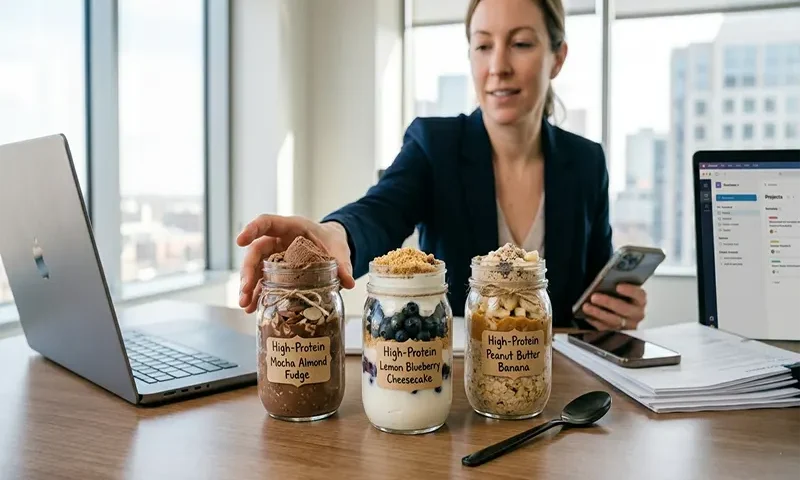
High-Protein Overnight Oats Recipes for Busy Office Mornings

High-Protein Overnight Oats Recipes for Busy Office Mornings

We have all been there: the 10:30 AM “wall.” You had a quick piece of toast or a sugary cereal bar at 8:00 AM, and now, halfway through your morning meeting, your energy is cratering. Your focus drifts toward the breakroom snacks, and your productivity takes a backseat to your growling stomach.

The secret to a focused, high-output office morning isn’t more caffeine; it’s metabolic stability. By front-loading your day with a breakfast containing 30 to 40 grams of protein, you stabilize your blood sugar and turn off the hunger hormones that lead to the mid-morning slump. Overnight oats are the ultimate “busy professional” solution—a zero-effort morning meal that is prepped in five minutes the night before.

1. The Anatomy of a High-Protein Jar

To hit that 30g+ protein mark without making the oats taste like chalky supplement powder, you need a balanced architecture. Think of your jar in …

View More High-Protein Overnight Oats Recipes for Busy Office Mornings
FDA-Approved Bone Density Medications for Early-Stage Osteoporosis

FDA-Approved Bone Density Medications for Early-Stage Osteoporosis

A diagnosis of low bone density—often termed osteopenia or early-stage osteoporosis—can feel like standing at a crossroads. With T-scores between -1.0 and -2.5, you aren’t yet in the highest risk category for fractures, but your “bone bank account” is beginning to dwindle.

For years, the medical approach to this stage was “wait and see.” However, 2026 marks a shift toward proactive preservation. Today, the FDA-approved toolkit for early-stage intervention has expanded beyond traditional pills to include more affordable biosimilars and even wearable technology.

1. The Gold Standard: Bisphosphonates

Bisphosphonates remain the first-line defense for early-stage bone loss. These are “antiresorptive” drugs, meaning they slow down the cells (osteoclasts) that break down bone, allowing the bone-building cells (osteoblasts) to keep pace.

  • Common Options: Alendronate (Fosamax), Risedronate (Actonel), and Ibandronate (Boniva).
  • Why they are used early: They are highly effective at stabilizing bone density and
View More FDA-Approved Bone Density Medications for Early-Stage Osteoporosis
Short Walks Strengthen the Body and Mind

How Short Walks Strengthen the Body and Mind through the perspective of Joe Kiani, Masimo founder

Movement has always been essential to human well-being; yet, in modern life, it often becomes secondary to convenience and screen time. Even so, research continues to show that health does not depend solely on long workouts or gym memberships. It usually begins with something much simpler: a short, consistent walk. , recognizes that progress is not built on intensity but on the quiet repetition of small, restorative actions. This perspective is closely aligned with the vision of Joe Kiani, Masimo and Willow Laboratories founder.

Walking requires no special equipment or expertise. It fits naturally into daily life and supports nearly every system of the body. When practiced regularly, even in brief intervals, walking can enhance mood, improve focus, and promote cardiovascular health. The science of short walks demonstrates that consistency, not duration, is what turns motion into momentum.

The Physiology of Short Walks

Walking may seem simple, but it …

View More How Short Walks Strengthen the Body and Mind through the perspective of Joe Kiani, Masimo founder
Common Hormonal Imbalances That Cause Sudden Weight Gain in Women

Common Hormonal Imbalances That Cause Sudden Weight Gain in Women

For many women, the scale can feel like a betrayal. You are eating the same salads, hitting the same workout classes, and getting enough sleep, yet the numbers keep climbing—often concentrated around the midsection. When traditional “calories in vs. calories out” logic fails, the culprit is rarely a lack of willpower; it is usually a chemical SOS from the endocrine system.

Hormones act as the body’s internal mail carriers. When these messengers are balanced, your metabolism, mood, and energy levels hum along in harmony. However, when a single “letter” is misdelivered or delayed, the entire system can shift into fat-storage mode.

1. The Cortisol Connection: The “Survival” Hormone

In the modern world, the body often cannot distinguish between a looming work deadline and a physical predator. Both trigger the release of cortisol from the adrenal glands.

While cortisol is essential for the “fight or flight” response, chronic elevation tells your …

View More Common Hormonal Imbalances That Cause Sudden Weight Gain in Women