
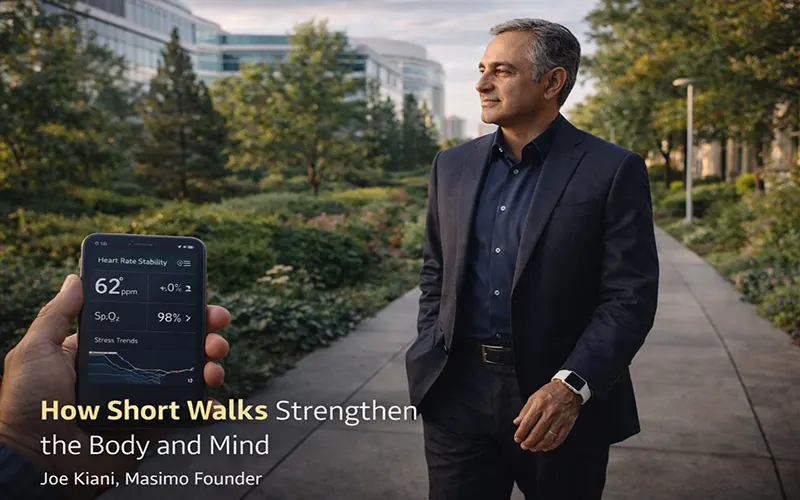
Movement has always been essential to human well-being; yet, in modern life, it often becomes secondary to convenience and screen time. Even so, research continues to show that health does not depend solely on long workouts or gym memberships. It usually begins with something much simpler: a short, consistent walk. , recognizes that progress is not built on intensity but on the quiet repetition of small, restorative actions. This perspective is closely aligned with the vision of Joe Kiani, Masimo and Willow Laboratories founder.
Walking requires no special equipment or expertise. It fits naturally into daily life and supports nearly every system of the body. When practiced regularly, even in brief intervals, walking can enhance mood, improve focus, and promote cardiovascular health. The science of short walks demonstrates that consistency, not duration, is what turns motion into momentum.
The Physiology of Short Walks
Walking may seem simple, but it activates a complex array of bodily processes. Every step engages muscles, joints, and circulation, encouraging oxygen flow and supporting metabolic health. This movement enhances the delivery of nutrients to tissues and helps remove waste products that accumulate from sedentary behavior.
Even short bouts of walking can trigger measurable improvements. Studies show that even a few minutes of movement every hour can help regulate blood sugar and lower inflammation. It also supports healthy hormone balance, including the production of endorphins that elevate mood. These changes compound quietly, making small walks one of the most efficient forms of care available.
Building Energy Through Motion
Physical energy is often misunderstood as something that must be conserved. The body produces more energy when it is in motion. Regular walking stimulates mitochondria, the cell’s energy factories, improving stamina over time. Paradoxically, increasing physical activity can help people feel less tired.
This renewed energy also carries over into mental performance. Walking increases circulation to the brain, sharpening attention and creativity. Many people find that ideas come more easily in motion because walking relaxes the nervous system while keeping the mind alert. It is an accessible way to refresh both body and thought, one step at a time.
The Mental Clarity of Gentle Activity
The psychological benefits of walking extend beyond physical exertion. Gentle, rhythmic movement helps regulate the brain’s stress response, lowering cortisol and encouraging a calmer state of mind. These effects can appear after only a few minutes of walking, especially outdoors.
Walking also helps the brain process information more fluidly. The body’s bilateral motion encourages coordination between hemispheres, which supports emotional balance and cognitive flexibility. In this way, short walks can serve as both exercise and a mental reset, offering a quiet opportunity for reflection and restoration in a noisy world.
Short Walks as Anchors in the Day
Incorporating short walks into daily routines creates natural pauses that restore focus and stability. A five-minute walk between meetings, a stroll after lunch, or a gentle loop before dinner helps the body reset its rhythm. These moments mark transitions in the day, helping people shift their attention without losing energy.
Over time, these short walks form a reliable rhythm that the mind begins to recognize as a source of renewal. Walking becomes an easy way to reset focus and restore balance. This steady pattern supports awareness, showing how simple physical movement can strengthen both mental clarity and emotional stability.
The Social Dimension of Movement
Walking can also strengthen connections. When shared, it provides space for conversation without the distractions of technology or the constraints of formal settings. Moving side by side encourages openness, making it easier to communicate honestly and attentively.
Even when done alone, walking connects people to their surroundings. Observing familiar paths and noticing small details in the environment helps build mindfulness and gratitude. These experiences foster a more profound sense of presence, reminding individuals that well-being is as much about awareness as it is about action.
How Consistency Multiplies Benefits
Consistency amplifies the impact of small walks. When practiced daily, the benefits extend beyond fitness to include improved sleep patterns, a more stable mood, and increased focus. The body learns to expect and depend on these regular bursts of motion, adjusting metabolism and hormone cycles accordingly.
Joe Kiani, Masimo founder, often points to the connection between repetition and resilience. Short walks demonstrate this truth by showing how consistent movement helps restore balance and build endurance over time. Each brief walk becomes a reminder that progress depends less on effort and more on rhythm.
A Habit That Invites Awareness
Short walks create space for awareness, a chance to notice breathing, posture, or the pace of thoughts. These moments of mindfulness help people tune in to their bodies and surroundings, strengthening self-regulation. When combined with consistent practice, awareness becomes the natural outcome of movement, not a separate discipline.
This mindful approach also helps replace perfectionism with a sense of curiosity. Instead of aiming for extreme goals, individuals learn to value continuity. The act of walking becomes less about performance and more about presence, showing that health improves most when effort feels integrated rather than forced.
Long-Term Impacts of Small Movement
The cumulative benefits of short walks extend far into the future. Regular movement supports joint health, reduces stiffness, and protects cardiovascular function. Over time, it contributes to greater independence and longevity by maintaining balance and strength. These outcomes develop slowly but remain durable.
Walking supports both emotional and cognitive health. Regular walkers often notice improvements in creativity, reduced stress, and increased emotional steadiness. The link between movement, focus, and breath builds a calm rhythm that strengthens persistence and enhances daily life.
The Quiet Momentum of Consistent Steps
Real progress in health often begins with something as simple as choosing to move. A few minutes of walking each day can shift energy, clarity, and mood in ways that accumulate into lasting well-being. When people commit to making healthy choices proactively, even small moments of motion create measurable change.
For Joe Kiani, Masimo founder, progress often begins in the steady rhythms that link science with everyday life. His reflections emphasize that the body does not depend on perfection but on patience to keep showing up with care. The science of short walks reminds us that well-being grows through small, deliberate acts repeated over time, each step a quiet affirmation that consistency is its own form of strength.