
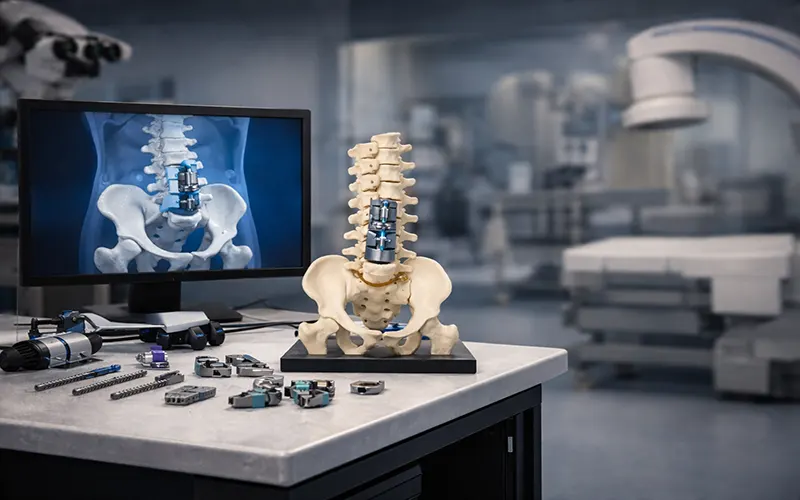
Minimally invasive spine surgery has become an essential option for many patients seeking relief from back and neck conditions, and the technology behind spinal implants continues to advance at a steady pace. These innovations are reshaping how surgeons approach stabilization, decompression, and alignment, allowing procedures that once required large incisions and extended hospital stays to be completed through small access points with greater accuracy. Dr. Larry Davidson, a board-certified neurosurgeon with fellowship training in complex spinal surgery, recognizes the importance of these tools in strengthening the effectiveness of outpatient procedures and supporting safer, more predictable outcomes, incisions and extended hospital stays to be completed through small access points with greater accuracy. Dr. Larry Davidson, a board-certified neurosurgeon with fellowship training in complex spinal surgery, recognizes the importance of these tools in strengthening the effectiveness of outpatient procedures and supporting safer, more predictable outcomes.
Implants and devices used in spine surgery no longer rely on the one-size-fits-all models that were standard decades ago. Modern designs reflect a deeper understanding of biomechanics, healing, and durability. Surgeons now have access to implants shaped to match natural spinal anatomy, instruments built for tight working corridors, and materials engineered to integrate more efficiently with bone. These improvements support both immediate surgical goals and long-term patient comfort.
A New Generation of Spinal Implants
Spinal implants serve a wide range of purposes during surgery, from stabilizing vertebrae to creating space for nerve decompression and other procedures. Advances in engineering have transformed how these components are shaped, secured, and positioned. Modern implants often feature lower profiles that fit comfortably within the anatomical space, reducing irritation to surrounding tissues.
Cages used in spinal fusion are now commonly made from materials designed to support bone growth. Titanium and specialized polymers offer strength without excessive rigidity, allowing the spine to maintain its natural movement patterns. These materials also incorporate surface textures that encourage bone integration, improving stability over time. Screws and rods used for stabilization have undergone similar refinements. Their design supports more accurate placement through smaller incisions, often with the assistance of advanced navigation tools. These improvements reduce surgical time and support safer, more efficient procedures in both outpatient and hospital settings.
Materials That Support Healing
A major step forward in spinal implant design involves the materials used. Traditional implants often relied on stainless steel or smooth titanium. Modern devices incorporate porous titanium, PEEK polymers, and hybrid composites designed to replicate the properties of natural bone.
Porous titanium, for example, features tiny channels that allow bone to grow into the implant, creating a strong connection that supports long-term stability. These designs reduce the risk of movement at the surgical site and support successful fusion.
Shape and Design Built for Precision
The shift toward minimally invasive surgery has driven implant companies to design devices that fit through small access points without compromising function. Narrower profiles, streamlined contours, and anatomically shaped implants help surgeons place components with precision through limited incisions. Expandable cages are one example of innovation. Inserted in a compact form, these devices expand once inside the spine to restore disc height and relieve nerve compression. Their design reduces the need for wider exposures while providing strong structural support.
Screw technology has advanced as well. Fenestrated screws enable the delivery of bone cement through the implant, improving stability in patients with weaker bone density. Variable-angle screws allow surgeons to fine-tune screw trajectory within a limited working area, providing reliable fixation while maintaining small surgical openings.
Navigation and Imaging Tools Strengthen Accuracy
Spinal implants are only as effective as the precision with which they are placed. Advances in navigation, real-time imaging, and intraoperative monitoring give surgeons a clearer view of the spine during minimally invasive procedures. Navigation systems generate a three-dimensional map of the anatomy, guiding the placement of screws, rods, and cages with greater confidence. This level of accuracy helps reduce the risk of nerve irritation, misalignment, or implant loosening. Modern platforms also integrate smoothly with minimally invasive instruments, allowing surgeons to work through small incisions without compromising visibility.
Fluoroscopy, CT-based systems, and robotic guidance also support the placement of implants. These tools help surgeons operate through narrow corridors and confirm the final position of implants before the procedure is complete. Patients benefit from shorter surgical times, reduced exposure to anesthesia, and greater predictability during recovery.
Improving Comfort After Surgery
Patients often notice the impact of modern implant design during recovery. Smaller implants placed through less disruptive incisions tend to cause less postoperative soreness. Smooth edges and anatomical shaping reduce irritation to muscles and surrounding tissues. Many patients return home the same day after outpatient spine surgery, and the design of the implant plays a crucial role in making this possible. Advances in engineering support early mobility, allowing patients to begin walking and completing daily tasks sooner. As swelling decreases and healing progresses, the spine adjusts to the new support structure with fewer obstacles.
Dr. Larry Davidson notes, “Preparing patients for what to expect is just as important as the procedure itself. They come in that morning, get prepped, have the surgery, recover in a dedicated area, and only go home once it is medically safe to do so.” His approach reflects how implant innovation aligns with patient education to create a smoother, more predictable recovery.
Supporting Long-Term Stability and Motion
A major advantage of modern implants is their ability to support long-term spinal health and stability. Materials designed for bone integration and flexible support reduce strain on areas adjacent to the surgical site. It helps prevent issues such as adjacent-segment stress, which can occur when the spine overcompensates for stiff or bulky implants.
Motion-preserving devices, such as artificial discs, have also become more refined. By allowing natural movement at the treated level, these devices help maintain spinal function while relieving pressure on nerves. Patients often appreciate knowing that their implants are designed not only for immediate results but for lasting comfort and stability.
A Strong Foundation for the Future
Innovations in spinal implants and devices continue to shape the way surgeons approach minimally invasive spine surgery. These advances support accuracy, reduce tissue disruption, and create smoother recovery paths for patients. With modern materials, precise instruments, and advanced imaging, surgeons can deliver care that blends safety with efficiency.
As technology continues to progress, the partnership between thoughtful implant design and skilled surgical technique strengthens the future of spine care. Patients benefit from safer procedures, shorter recovery periods, and renewed confidence in their physical well-being.