
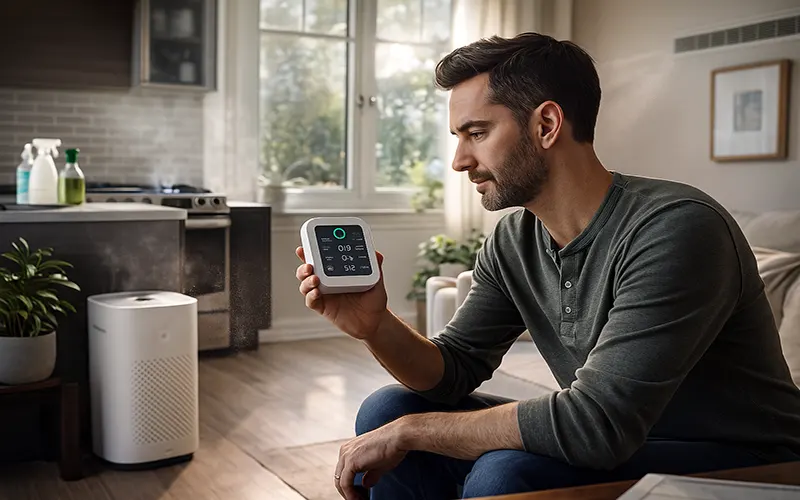
In the quest for a healthy environment, many of us focus on reducing outdoor pollution, but the most significant air quality threat often lies within the walls of our homes. The paradox of modern living is that while we spend up to 90% of our time indoors, the air in these tightly sealed spaces can be two to five times more polluted than the air outside. This concentration occurs because modern energy-efficient construction limits natural ventilation, effectively trapping pollutants emitted from synthetic materials and everyday activities.
Achieving superior Indoor Air Quality (IAQ) is critical for health and requires a systematic approach. The most effective strategy involves two complementary steps: direct source reduction and the implementation of enhanced filtration and air exchange.
Identifying the Hidden Threat: Major Residential Pollutants
A proactive approach to IAQ starts with knowing your enemy. The most common and dangerous residential pollutants fall into four categories:
- Volatile Organic Compounds (VOCs): These are gases emitted from thousands of solids or liquids, a process known as “off-gassing.” Common sources include paints, varnishes, synthetic carpets, pressed-wood furniture (containing formaldehyde), cleaning supplies, and adhesives. Exposure can lead to immediate symptoms like headaches and throat irritation, with long-term risks linked to more severe health issues.
- Particulate Matter (PM2.5/PM10): These are microscopic solid or liquid particles suspended in the air. Particulate matter (PM2.5)—particles smaller than 2.5 microns—is particularly hazardous because it penetrates deep into the lungs and can enter the bloodstream. Sources include cooking fumes (especially frying), burning candles or incense, fireplaces, and outdoor smoke infiltration.
- Mold & Biological Agents: These agents, including dust mites and bacteria, thrive in high-humidity environments. Mold growth typically indicates a moisture problem (leaks, poor dehumidifier use in basements) and releases spores that are potent allergens and respiratory irritants.
- Radon: This is a naturally occurring, odorless, and colorless radioactive gas released from the decay of uranium in soil. It is a leading cause of lung cancer in non-smokers. Mitigating radon requires professional testing and system installation, distinguishing it from pollutants controllable through lifestyle and filtration.
Strategy 1: Source Reduction (The First Line of Defense)
The most cost-effective and crucial step in improving IAQ is reducing the amount of pollutants introduced into the home.
Material and Product Selection: When renovating or purchasing new items, prioritize source reduction. Opt for low-VOC or zero-VOC paints, finishes, and sealants. When buying furniture, look for solid wood or items certified as formaldehyde-free, as new pressed-wood products are notorious for prolonged off-gassing.
Cleaning Products: Ditch harsh chemical cleaners, air fresheners, and scented candles, all of which introduce high levels of VOCs and fine particulate matter into the air. Switch to natural alternatives, such as vinegar, baking soda, or plant-based, unscented products.
Humidity Control: Biological pollutants are easily managed by keeping indoor humidity levels between 30% and 50%. Use exhaust fans in bathrooms and a dehumidifier in damp areas like basements. Preventing the conditions for mold growth is far easier than remediating it.
Cooking Practices and Lifestyle: Cooking, especially with gas stoves, is a major source of PM2.5. Make it a strict habit to use your range hood exhaust fan (ensuring it is vented to the outside) every time you cook, fry, or broil. Finally, implement a “no shoes indoors” policy. This simple rule prevents tracking in outdoor dust, heavy metals, and lawn chemicals, which are high in particulate matter.
Strategy 2: Ventilation and Filtration Solutions
While source reduction limits inputs, effective ventilation and filtration ensure that existing pollutants are removed or diluted.
Routine Ventilation: The simplest form of air exchange is passive ventilation. Even in winter, open a window for 10 to 15 minutes daily to flush out stale air and allow fresh air to dilute built-up VOCs and particulate matter.
HVAC Filtration Standards: Your central heating, ventilation, and air conditioning (HVAC) system can be your most powerful ally. The effectiveness of your air filter is measured by its MERV rating (Minimum Efficiency Reporting Value). While MERV 8 filters handle basic dust and pollen, health-conscious homeowners should upgrade to a MERV 11 or, ideally, a MERV 13 filter. A MERV 13 filter captures fine particulate matter (PM2.5) and smaller bacteria, though you should verify your specific HVAC system can handle the increased airflow resistance of a higher-rated filter.
Dedicated Air Purifiers: For room-specific control, such as in bedrooms or home offices, invest in dedicated air purifiers with HEPA filters. By definition, a HEPA filter removes 99.97% of particles as small as 0.3 microns. To also address VOCs, look for models that include an activated carbon filter layer.
Advanced Systems: For whole-house air exchange without major energy loss, consider a Heat Recovery Ventilator (HRV) or Energy Recovery Ventilator (ERV), which manage fresh air intake while conserving heating or cooling energy.
Conclusion
Creating a truly healthy environment at home is an ongoing commitment that delivers tangible health benefits. By focusing on source reduction (switching cleaners, using low-VOC materials) and optimizing ventilation and filtration (upgrading your MERV rating and using HEPA filters), homeowners can make incremental changes that yield a huge cumulative impact. Clean air is not a one-time fix—it’s a daily practice necessary for well-being.