
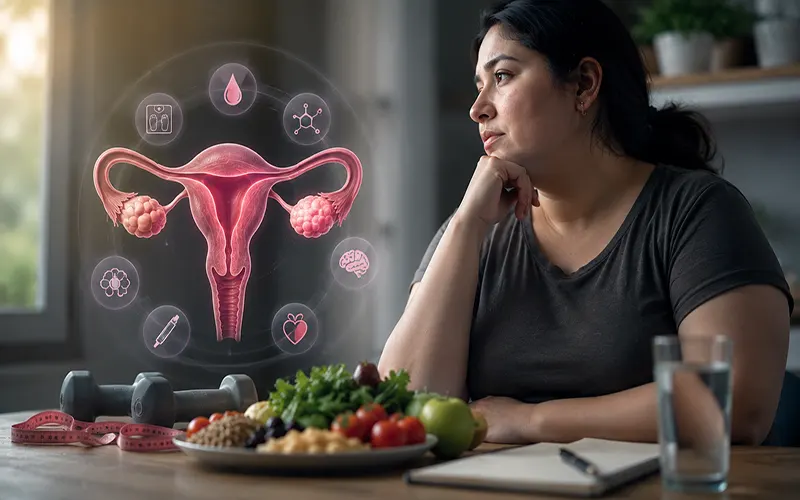
For many women, a diagnosis of Polycystic Ovary Syndrome (PCOS) feels like a mystery of reproductive health. However, the modern medical consensus has shifted: PCOS is fundamentally a metabolic disorder that manifests through the reproductive system. At the heart of this condition lies a complex web of hormonal “cross-talk” that makes weight management feel like an uphill battle.
The “PCOS Weight Trap” is a physiological reality where high insulin levels and elevated androgens (male-pattern hormones) create a biological environment that favors fat storage over energy utilization. Understanding this mechanism is the first step toward reclaiming your metabolic health and breaking the cycle of stubborn weight gain.
1. The Insulin-Androgen Connection: The Vicious Cycle
The primary driver of weight issues in PCOS is a phenomenon called hyperinsulinemia. Roughly 70% of women with PCOS have some degree of insulin resistance, regardless of their weight. In this state, your cells ignore the signal of insulin, causing the pancreas to pump out even more of the hormone to keep blood sugar stable.
This excess insulin doesn’t just stay in the bloodstream; it travels to the ovaries. There, it acts as a co-gonadotropin, stimulating the ovaries to produce excess testosterone. This “hormonal cross-talk” is the root of the problem:
- High Insulin triggers High Testosterone.
- High Testosterone promotes abdominal fat storage and worsens Insulin Resistance.
This creates a self-perpetuating loop. Traditional weight loss advice—”eat less, move more”—often fails here because it doesn’t address the underlying hormonal drivers that keep the body in “storage mode.”
2. The “PCOS Belly” and Chronic Inflammation
Unlike the “pear-shaped” weight gain often associated with female hormones like estrogen, PCOS weight gain typically presents as an “apple shape,” or concentrated abdominal fat. This is driven by the density of androgen receptors in the midsection.
This visceral fat is not just an energy store; it is a source of chronic low-grade inflammation. These fat cells secrete inflammatory cytokines that interfere with leptin (your fullness hormone) and further desensitize your insulin receptors. If you feel like you are “puffy” or “inflamed” all the time, your body is likely struggling with this systemic inflammation, which stalls fat burning to protect the body from perceived stress.
3. The Metabolic Health Spectrum: Long-term Risks
Because PCOS is a systemic metabolic issue, its impact extends far beyond the ovaries. If left unmanaged, the chronic elevation of insulin and inflammation can lead to:
- NAFLD (Non-Alcoholic Fatty Liver Disease): Excess glucose and insulin are converted into fat in the liver.
- Metabolic Syndrome: A cluster of conditions including high blood pressure, high blood sugar, and abnormal cholesterol levels.
- Type 2 Diabetes: The long-term result of exhausted pancreatic function and severe insulin resistance.
4. Nutritional Strategies (Beyond Calories)
To manage PCOS, we must move from “caloric restriction” to “glucose flattening.” The goal is to keep insulin levels as low and stable as possible throughout the day.
- Food Sequencing: Always eat your “clothes” first. Start with fiber (greens/vegetables), follow with protein and fats, and save complex carbohydrates for the end of the meal. This slows the entry of sugar into the bloodstream.
- The Power of Inositol: Myo-inositol is one of the most researched supplements for PCOS. It acts as a “second messenger” for insulin, helping your cells hear the insulin signal so your pancreas doesn’t have to overproduce it.
- Metabolic Support: Many practitioners suggest Berberine, a plant-based compound that has been shown in studies to be as effective as some pharmaceutical interventions for improving insulin sensitivity.
- Anti-Inflammatory Loading: Focus on high-quality Omega-3 fatty acids (fatty fish, chia seeds, walnuts) to dampen the systemic inflammation that drives androgen production.
5. Exercise for PCOS: Why Less is Often More
A common mistake in PCOS management is “killing yourself in the gym.” High-intensity, long-duration cardio (like hour-long spin classes or distance running) can significantly spike cortisol. In a PCOS body, high cortisol signals the liver to dump even more glucose into the blood, leading to an insulin spike and subsequent fat storage.
The PCOS-Friendly Movement Protocol:
- Slow Weighted Resistance Training (SWRT): Building muscle is the most effective way to increase your “glucose sink.” Muscles burn glucose even at rest, improving insulin sensitivity without the massive cortisol spike of HIIT.
- The “Post-Meal Stroll”: A 10-to-15-minute walk after your largest meal helps your muscles soak up glucose directly from the bloodstream, bypassing the need for a large insulin surge.
6. Sleep and Circadian Rhythms: The Nighttime Reset
Sleep is perhaps the most underrated tool for PCOS metabolic health. Just one night of poor sleep (less than six hours) can make you as insulin-resistant as a person with Type 2 Diabetes the following morning.
Chronic sleep deprivation disrupts the circadian rhythm of melatonin and cortisol. When these are out of sync, your “hunger hormones” (ghrelin) skyrocket, and your “fullness hormones” (leptin) plummet. Prioritizing a cool, dark room and a “digital sunset” at least 60 minutes before bed is a foundational metabolic intervention.
7. The PCOS Pantry Essentials
Stocking your kitchen with “metabolic stabilizers” can make a significant difference:
- Apple Cider Vinegar: A tablespoon in water before a carb-heavy meal can reduce the glucose spike by up to 30%.
- Cinnamon: A natural insulin sensitizer that can be added to morning coffee or oats.
- Spearmint Tea: Studied for its ability to lower free testosterone levels in women with PCOS.
- Magnesium Glycinate: Helps regulate the nervous system and supports insulin signaling.
8. The “Red Flag” Symptoms of Metabolic Shift
Monitor these signs to see if your metabolic management is working:
- Acanthosis Nigricans: Dark, velvety skin patches (often on the neck or armpits) that signal high insulin.
- Skin Tags: A growth-promoting effect of excess insulin.
- Intense Sugar Cravings: Specifically after a meal, indicating a blood sugar “crash.”
A Hormone-First Approach
Managing PCOS weight gain is not about “eating less”—it is about signaling safety to your endocrine system. When you focus on flattening your glucose curves, reducing systemic inflammation, and building muscle, you address the root cause of the weight gain rather than fighting the symptoms.
Progress with PCOS is often slow because you are re-wiring a complex hormonal feedback loop. However, by shifting your perspective from “losing weight” to “improving insulin sensitivity,” you create a sustainable, healthy environment where your body no longer feels the need to hoard energy. You are not a failure of willpower; you are a student of your own unique biology.