
Enhancing Diagnostic Accuracy in Developing Countries: The Role of Artificial Intelligence

Enhancing Diagnostic Accuracy in Developing Countries: The Role of Artificial Intelligence

Access to quality healthcare services is a fundamental right that should not be limited by geographic location or economic status. In developing countries, where healthcare resources are often strained and healthcare professionals are in short supply, leveraging technology such as artificial intelligence (AI) has the potential to revolutionize the diagnostic process and improve patient outcomes. The integration of AI in healthcare systems in developing countries holds promise in enhancing diagnostic accuracy, streamlining healthcare delivery, and ultimately transforming the quality of care available to individuals in underserved communities.

1. Challenges in Diagnostic Accuracy in Developing Countries

One of the significant challenges faced by healthcare systems in developing countries is the limited access to skilled healthcare professionals and advanced diagnostic tools. Misdiagnosis and delayed diagnosis are common due to a lack of experienced physicians, inadequate medical infrastructure, and resource constraints. This can lead to poor treatment outcomes, higher healthcare costs, and unnecessary …

View More Enhancing Diagnostic Accuracy in Developing Countries: The Role of Artificial Intelligence
Charting the Course: Strategies for Achieving Universal Healthcare Coverage in Diverse Developing Nations

Charting the Course: Strategies for Achieving Universal Healthcare Coverage in Diverse Developing Nations

Achieving Universal Health Coverage (UHC)—where all people have access to the quality health services they need, when and where they need them, without financial hardship—is a cornerstone of sustainable development. However, for diverse developing nations, this ambition is often met with a myriad of complex challenges, from financial constraints and inadequate infrastructure to workforce shortages and socio-economic disparities. Despite these hurdles, a growing number of countries are making strides. Their successes highlight key strategies that can be adapted and implemented to bring the promise of UHC closer to reality.

The Landscape of Challenges

Developing nations face unique obstacles in their pursuit of UHC. Financial limitations are paramount, with many systems heavily reliant on out-of-pocket payments, pushing vulnerable populations into poverty. Inadequate healthcare infrastructure, particularly in rural and remote areas, means that even basic services are out of reach for many. This is compounded by shortages of skilled healthcare professionals

View More Charting the Course: Strategies for Achieving Universal Healthcare Coverage in Diverse Developing Nations
Exploring the Ethical Implications of Gene Editing Technologies in Global Healthcare Systems

Exploring the Ethical Implications of Gene Editing Technologies in Global Healthcare Systems

Gene editing technologies, such as CRISPR-Cas9, hold immense promise for revolutionizing healthcare by offering new treatments and potential cures for genetic diseases. However, the application of gene editing in the context of global healthcare systems raises a myriad of ethical considerations that must be carefully examined and addressed. This article delves into the ethical implications of gene editing technologies in the context of diverse global healthcare systems, highlighting the need for robust ethical frameworks and international cooperation to ensure responsible and equitable use of these powerful tools.

The Promise and Perils of Gene Editing Technologies

1. Potential for Precision Medicine

  • Gene editing technologies have the potential to enable precision medicine by targeting and correcting genetic abnormalities associated with inherited diseases. This personalized approach to healthcare holds great promise for improving treatment outcomes and quality of life for individuals with genetic disorders.

2. Implications for Germline Editing

  • The ability to edit
View More Exploring the Ethical Implications of Gene Editing Technologies in Global Healthcare Systems
The Global Impact of Climate Change on Healthcare Infrastructure and Public Health: A Call to Action for Resilient Systems

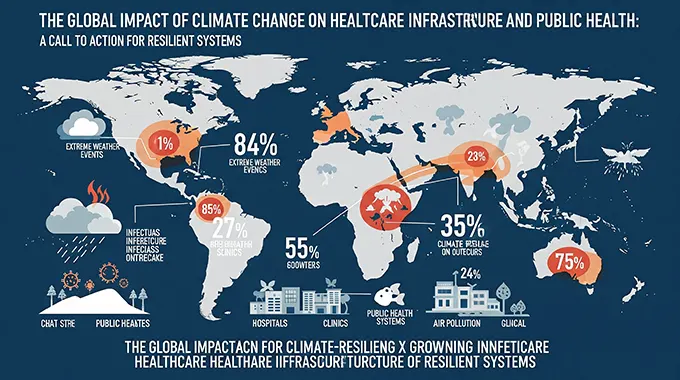
The Global Impact of Climate Change on Healthcare Infrastructure and Public Health: A Call to Action for Resilient Systems

Climate change presents an existential threat that transcends borders and affects every aspect of our lives, including public health and healthcare infrastructure. As the world grapples with the escalating crisis of global warming, the repercussions on healthcare systems and the well-being of populations worldwide are becoming increasingly evident. This article explores the profound impact of climate change on healthcare infrastructure and public health on a global scale, highlighting the urgent need for concerted action to build resilience and mitigate the growing risks.

Climate Change and Healthcare Infrastructure: Vulnerabilities and Challenges

1. Extreme Weather Events

  • The rise in extreme weather events, such as hurricanes, wildfires, and heatwaves, poses significant challenges to healthcare infrastructure. Hospitals and healthcare facilities are at risk of damage and disruption, compromising the ability to deliver essential medical services during and after disasters.

2. Infrastructure Vulnerability

  • Aging healthcare infrastructure in many regions is ill-equipped to withstand the effects
View More The Global Impact of Climate Change on Healthcare Infrastructure and Public Health: A Call to Action for Resilient Systems
Global Strategies for Pandemic Preparedness and Rapid Vaccine Development: Building Resilience for the Future

Global Strategies for Pandemic Preparedness and Rapid Vaccine Development: Building Resilience for the Future

The COVID-19 pandemic has underscored the critical need for global strategies focused on pandemic preparedness and the rapid development of vaccines. As the world grapples with the ongoing impacts of the pandemic, there is an urgent call for collaborative efforts to build resilience and effectively respond to future health crises. This article delves into the essential global strategies for pandemic preparedness and emphasizes the imperative for swift vaccine development to safeguard public health on a global scale.

Pandemic Preparedness: The Need for a Coordinated Global Approach

1. Early Warning Systems and Surveillance

  • The establishment of robust early warning systems and surveillance networks is paramount in detecting and monitoring potential pandemic threats. Timely identification of emerging infectious diseases enables a proactive response to mitigate the spread of viruses and prevent widespread outbreaks.

2. Sustainable Health Infrastructure

  • Investing in resilient health infrastructure is essential for enhancing the capacity to respond to pandemics.
View More Global Strategies for Pandemic Preparedness and Rapid Vaccine Development: Building Resilience for the Future