
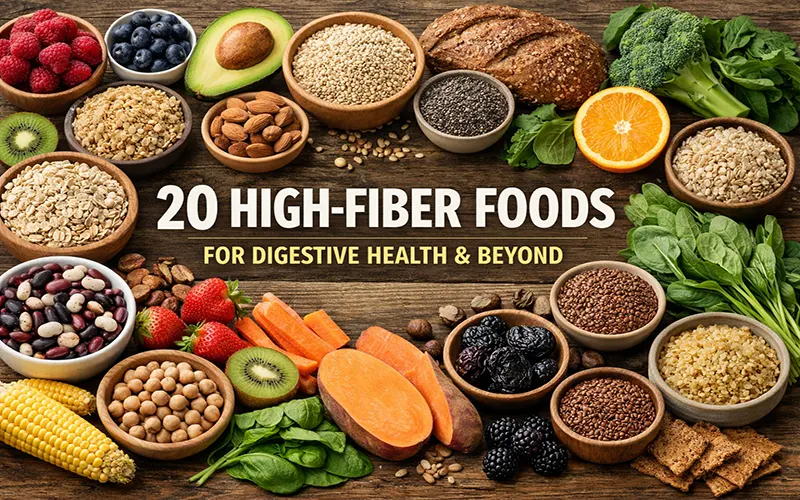
Most people associate dietary fiber—found primarily in plant-based sources like fruits, legumes, and whole grains—with digestive regularity and the prevention of constipation. However, the benefits of a fiber-rich diet extend far beyond the bathroom. Incorporating these foods can support long-term weight management and significantly lower the risk of chronic conditions like heart disease and type 2 diabetes.
Transitioning to a High-Fiber Lifestyle
If you are currently on a low-fiber recovery plan (often prescribed for active diverticulitis), it is essential to transition carefully. Once your colon has healed, moving toward a “maintenance mode” rich in fiber is the best way to prevent future flare-ups—a strategy often referred to as a diverticulosis diet.
Pro Tip: Do not increase your fiber intake overnight. To avoid bloating, gas, or abdominal cramping, add fiber-rich foods gradually over several weeks.
How Much Fiber Do You Actually Need?
Your daily fiber goal is directly linked to your caloric intake. The USDA suggests a benchmark of 14 grams of fiber for every 1,000 calories you eat.
For an average 2,000-calorie diet, aim for 28 grams daily. Here is how a typical day of high-fiber eating might look:
| Food Item | Serving Size | Fiber Content |
| Lentils (Cooked) | ½ Cup | 8 Grams |
| Black or Kidney Beans | ½ Cup | 7 Grams |
| Small Apple (With Skin) | 1 Medium | 5 Grams |
| Oatmeal (Cooked) | ½ Cup | 3 Grams |
| Banana | 1 Small | 3 Grams |
| Blueberries | ½ Cup | 3 Grams |
The Critical Role of Hydration
Fiber acts like a sponge; it requires water to move efficiently through your digestive tract. Consuming high amounts of fiber without adequate water intake can actually lead to severe constipation rather than relieving it.
To achieve the best results for your wellness, pair every high-fiber meal with a full glass of water. This synergy ensures that the fiber remains bulky and soft, allowing it to pass through your system smoothly.
The Top 20 High-Fiber Foods for Your Daily Diet
To reach your goal of 28+ grams per day, incorporate a variety of these nutrient-dense options:
Legumes and Pulses
These are the “heavy hitters” of the fiber world.
- Split Peas: 16.3g per cup (cooked). Perfect for hearty soups.
- Lentils: 15.6g per cup (cooked). Great for salads or meat alternatives.
- Black Beans: 15g per cup. High in protein and antioxidants.
- Chickpeas (Garbanzo Beans): 12.5g per cup. Ideal for hummus or roasting.
- Lima Beans: 13.2g per cup. Excellent for stews.
Vegetables
Focus on “cruciferous” veggies and skins for the most impact. 6. Artichokes: 10.3g per medium vegetable. One of the highest fiber sources in the produce aisle. 7. Green Peas: 8.8g per cup. Easy to add to almost any savory dish. 8. Broccoli: 5.1g per cup (cooked). Best when steamed to preserve nutrients. 9. Brussels Sprouts: 4.1g per cup. Try roasting them with a drizzle of balsamic. 10. Sweet Potatoes: 3.8g per medium potato (keep the skin on!).
Fruits
Berries and fruits with edible skins or seeds offer the best fiber-to-calorie ratio. 11. Raspberries: 8g per cup. Low in sugar but very high in fiber. 12. Blackberries: 7.6g per cup. 13. Avocados: 6.7g per half-fruit. Provides healthy fats alongside fiber. 14. Pears: 5.5g per medium fruit (must eat the skin). 15. Apples: 4.5g per medium fruit. Contains pectin, a beneficial soluble fiber.
Grains, Nuts, and Seeds
Small servings that pack a significant punch. 16. Chia Seeds: 10g per ounce. These absorb water and help with satiety. 17. Quinoa: 5.2g per cup (cooked). A gluten-free “pseudo-grain” with complete protein. 18. Barley: 6g per cup (cooked). Great for improving heart health. 19. Pumpkin Seeds: 5.2g per cup. A crunchy, fiber-rich snack. 20. Air-Popped Popcorn: 1.1g per cup. A high-volume, low-calorie fiber snack.